

Lung Cancer Research Progress
2024 Peg’s Fight for Life Early Career Research Award Recipient
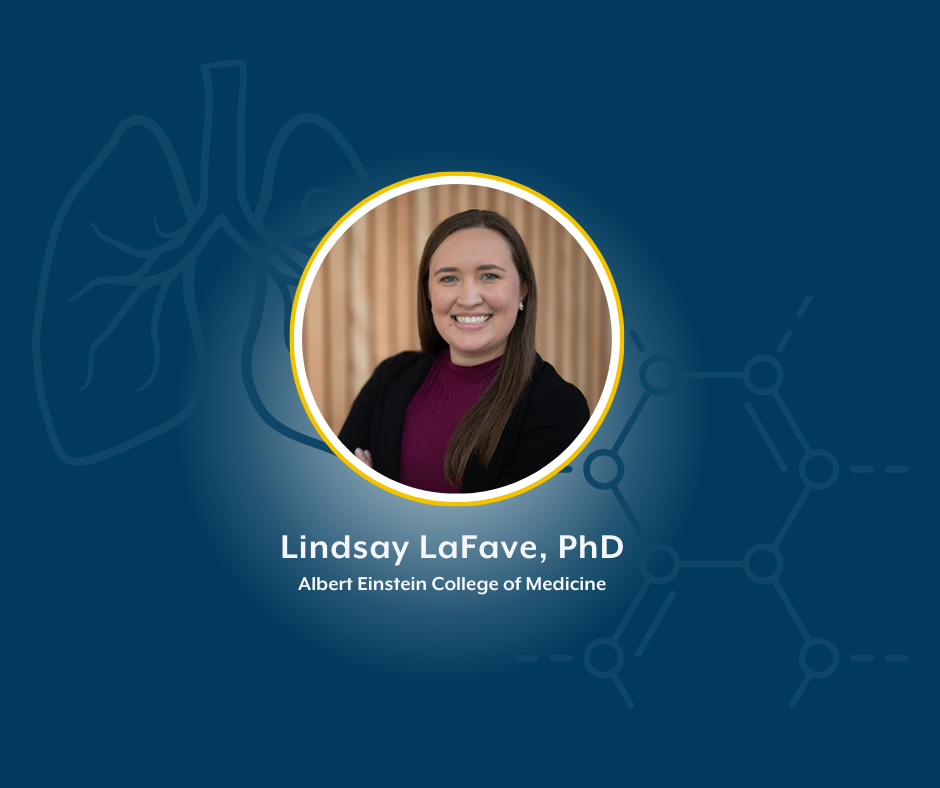
Principal Investigator: Lindsay LaFave, PhD, Albert Einstein College of Medicine
Project Title: Exploring Differences in Immunotherapy Response in EGFR and KRAS-mutated Lung Cancer
Immunotherapy has revolutionized lung cancer treatment, but not all tumors respond equally. Some genetic mutations, like EGFR, are associated with lower response rates, while others, like KRAS, respond more favorably. Dr. Lindsay LaFave, recipient of the 2024 Peg’s Fight for Life Early Career Research Award, is tackling this challenge head-on. Her goal: understand why these differences exist and how they might be overcome.
Meet Dr. Lindsay LaFave
Dr. LaFave’s research focuses on the role of chromatin biology — the way DNA is packaged and regulated in cells — in cancer development and treatment response. Her lab at the Albert Einstein College of Medicine uses cutting-edge epigenomic technologies and mouse models to investigate how gene regulation drives tumor heterogeneity and immune response.
Her career path has combined rigorous training in hematopoiesis and stem cell biology with a deep focus on lung cancer:
-
Graduate work at Memorial Sloan Kettering (Gerstner Sloan Kettering Graduate School) explored how tumor suppressor loss impacts disease progression. Her discoveries on ASXL1 and BAP1 mutations were published in Cancer Cell and Nature Medicine.
-
Postdoctoral research at MIT and Harvard further explored epigenetic mechanisms in lung cancer, using single-cell ATAC-sequencing to map how tumor cells evolve and lose identity over time.
Today, Dr. LaFave’s independent lab combines this expertise in chromatin biology and lung tumor modeling to identify novel therapeutic strategies, particularly for patients whose tumors resist standard treatments.
About the Project
Understanding EGFR vs. KRAS Tumors
Dr. LaFave’s ABOH-funded project investigates why EGFR-mutated tumors respond poorly to immunotherapy compared with KRAS-mutated tumors. Using murine models and organoids (miniature tumor models grown in the lab), her team is:
-
Comparing the immune microenvironments of KRAS and EGFR mutant tumors
-
Profiling gene expression in tumor cells to understand differences in inflammation, signaling pathways, and immune interactions
-
Exploring how transcription factors and chromatin regulators influence tumor cell identity and immune crosstalk
-
Biobanking patient samples to study real-world tumor behavior and immune responses
The ultimate goal is to identify pathways that could be targeted to improve immunotherapy outcomes for patients with EGFR-mutated lung cancers.
Progress Report: 2026
In the first phase of the project, Dr. LaFave’s team has:
-
Characterized gene expression differences in KRAS vs. EGFR mutant tumor cells, revealing distinct patterns in inflammation, cytokine signaling, and adaptive immune activation.
-
Performed immune profiling, showing differences in immune cell infiltration and activity between KRAS and EGFR tumors.
-
Observed early differences in tumor evolution, with KRAS tumors losing cell identity faster than EGFR tumors, suggesting that tumor cell state may influence immune response.
-
Developed KRAS and EGFR organoids to study cancer-initiating cells in a controlled lab environment.
-
Started a biobank of patient samples, collecting 15 early-stage lung adenocarcinoma tissues for multi-faceted analysis in upcoming studies.
These findings lay the groundwork for understanding why some tumors are “cold” to immunotherapy while others are “hot” — and for developing strategies to make resistant tumors more responsive.
Why This Matters
By comparing EGFR and KRAS mutant tumors, Dr. LaFave’s research addresses a critical unmet need in lung cancer treatment. Her work could:
-
Reveal new biomarkers to predict immunotherapy response
-
Identify novel therapeutic targets for resistant tumors
-
Inform personalized treatment strategies, giving more patients a chance to benefit from immunotherapy
The Peg’s Fight for Life Award is supporting this innovative, high-impact research, helping Dr. LaFave and her team generate insights that may ultimately improve outcomes for patients with lung cancer.
